Why One Smart Workout Swap Can Change Your Results
If you’ve been showing up consistently to workouts, sweating hard, and still wondering why your strength or body composition hasn’t changed much lately — you’re not alone.
This is one of the most common conversations I have with clients. People are doing all the right things: moving their bodies regularly, staying active, committing to classes, and prioritizing health. And that matters. Consistency is always the foundation.
Where progress sometimes stalls isn’t effort — it’s stimulus.
Your body adapts to what you repeatedly ask it to do. If the weights, volume, and structure of your workouts stay the same for long periods of time, your nervous system and muscles become efficient at that workload. You still get a great workout… but the signal for change gets quieter.
Classes Are Valuable — And So Is Intentional Strength
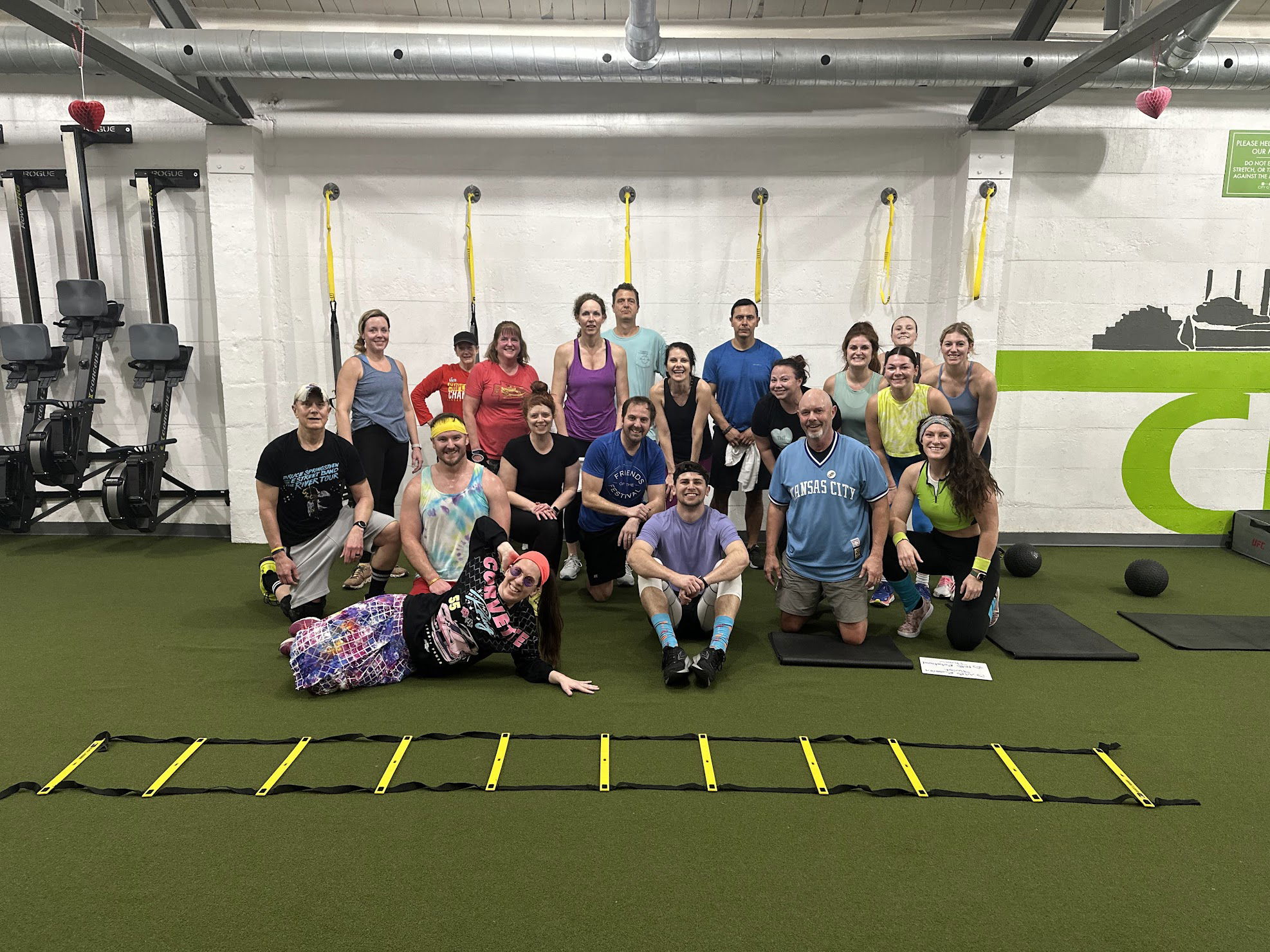
Group classes build community, accountability, energy, and momentum. They’re an amazing way to stay consistent and connected.
What they often can’t do well (by design) is:
- Individualize loading
- Track progressive overload
- Manage recovery between muscle groups
- Scale volume strategically over time
That’s not a flaw — it’s simply the nature of group programming. When someone’s goal is strength gains, body re-composition, or long-term performance, layering in even one intentional strength-focused workout per week can dramatically change the adaptation signal your body receives.
A Real Example: Training Volume Matters
Recently, one of my clients completed a structured strength session that totaled approximately 11,250 pounds of work across her lifts.
If she had completed a similar session (exercise selection with dumbbells) inside a typical class format, her total training volume would have been closer to ~3,960 pounds of work.
That’s nearly 3x more stimulus in a single session.
And when that difference compounds over time, the impact becomes significant.
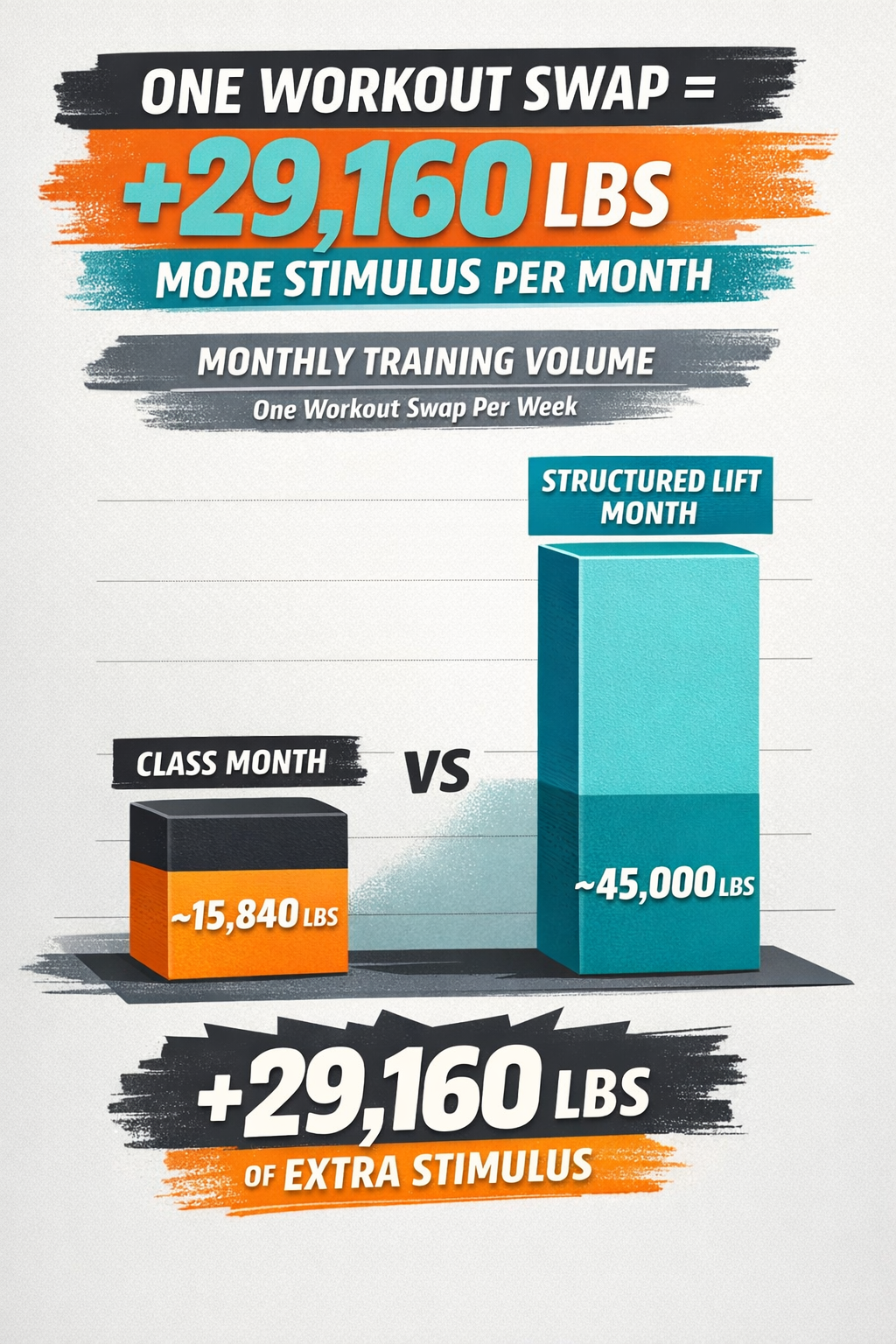
"Replacing just one workout per week with intentional strength training can expose your body to nearly 30,000 additional pounds of meaningful stimulus in a month. That’s a completely different adaptation signal for muscle, strength, and body composition."
What This Means For Your Body
Your muscles adapt based on the total amount of meaningful work they experience over time. More quality volume — paired with adequate recovery and nutrition — gives your body a reason to build strength, muscle tissue, and metabolic capacity.
This doesn’t mean you need to train more hours or abandon workouts you enjoy. It simply means that strategic structure matters more than random effort.
Even one intelligently programmed lift each week can:
- Increase strength faster
- Improve muscle tone and density
- Support fat loss through higher lean mass
- Improve joint tolerance and confidence
- Reduce plateau frustration
Small changes compound into big outcomes.
Real Results: My Client's 1 Month Progress
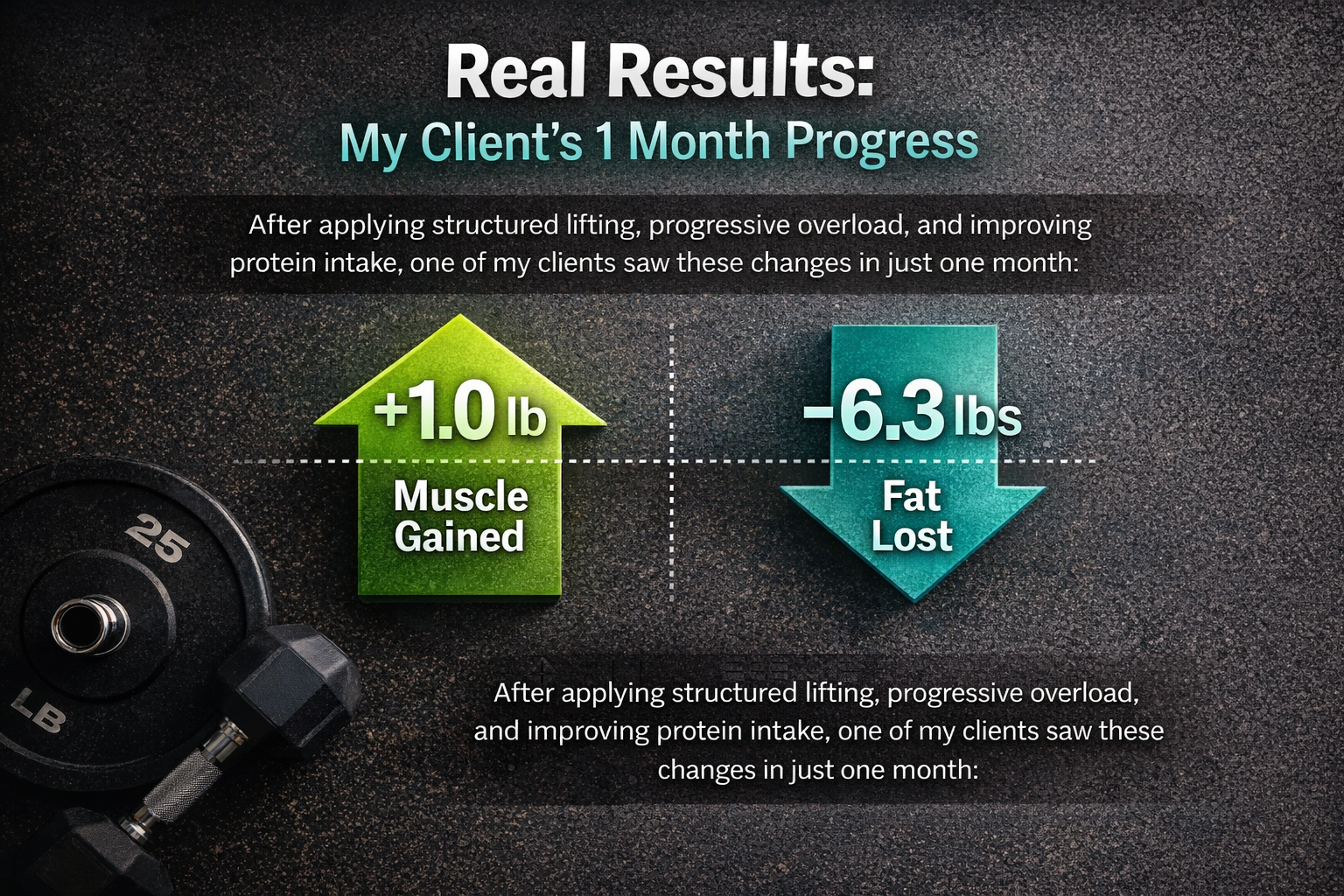
After applying structured lifting, progressive overload, and improving protein intake, one of my clients saw the following changes in just one month:
- Almost +1 lb of muscle gained
- Approximately –6.3 lbs of fat lost
Those results didn’t come from doing more workouts — they came from doing smarter ones (and even less strenuous ones). Her body finally received enough stimulus to adapt. This is what happens when training becomes intentional instead of repetitive.
Simple Volume Swaps That Create Big Results (Real Client Example)
Another way I help clients increase meaningful training stimulus — without overwhelming them — is by making smart exercise swaps inside movements they already feel comfortable doing.
One of my clients currently follows a dumbbell-based program from my Strong Looks Good On You series because she feels confident and safe using dumbbells. That consistency matters. We didn’t throw her routine away — we simply layered in a few strategic “big lift” swaps to increase volume and loading potential.
Here are a few examples of what that looks like:
• Dumbbell Squats → Leg Press
The leg press allows higher loading with more stability, making it easier to accumulate volume safely and progressively over time.
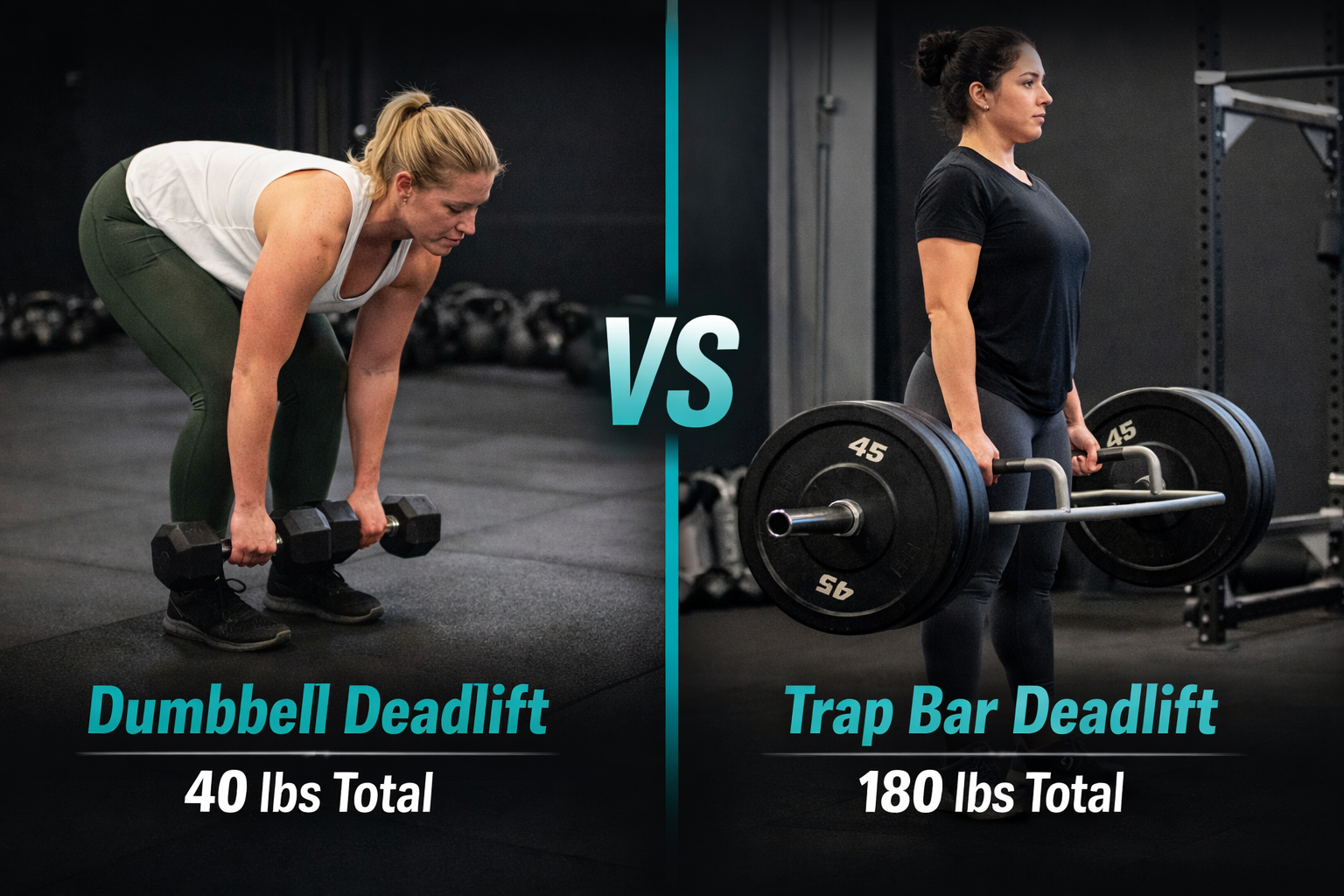
• Dumbbell Deadlifts → Trap Bar Deadlift
The trap bar increases total load capacity while keeping joint positioning friendly and confidence high — a huge volume driver.
• Dumbbell Incline Press → Cable Incline Press
Cables create constant tension through the full range of motion and allow smoother progression to allow heavier weight progression than handling 30+ lb dumbbells which can be very difficult.
This is exactly how I approach coaching: not forcing people into intimidating programs, but helping them evolve their training intelligently based on what feels accessible, safe, and sustainable.
Small changes like this — layered consistently — compound into real strength, muscle development, and body composition change.
You Don’t Need More Effort — You Need Better Structure
You don’t need to quit classes or completely change your routine. Most people simply benefit from adding one or two structured strength sessions into their weekly flow. There are multiple ways I help clients do this depending on goals, schedule, and budget:
If you’ve ever had a moment where you finally have the time and motivation to train — but there isn’t a class on the schedule — that’s exactly the gap I built my remote program to fill. Strong Looks Good On You becomes your workout when no class exists. You still get structure, progression, and direction — without having to guess what to do or wait for a class time to line up. And if you’d rather not navigate that on your own, we can also meet for a one-time session to build a gym routine together that you feel confident repeating independently. Sometimes a single session of clarity and structure is all it takes to unlock consistent progress.
Whether you choose the online program, a one-off session, or ongoing coaching, my role is the same: to help you train with purpose, increase meaningful volume safely, and build a routine that actually fits your life.
Strong looks good on you.
🖤— Justine
Tapp Into It Fitness